
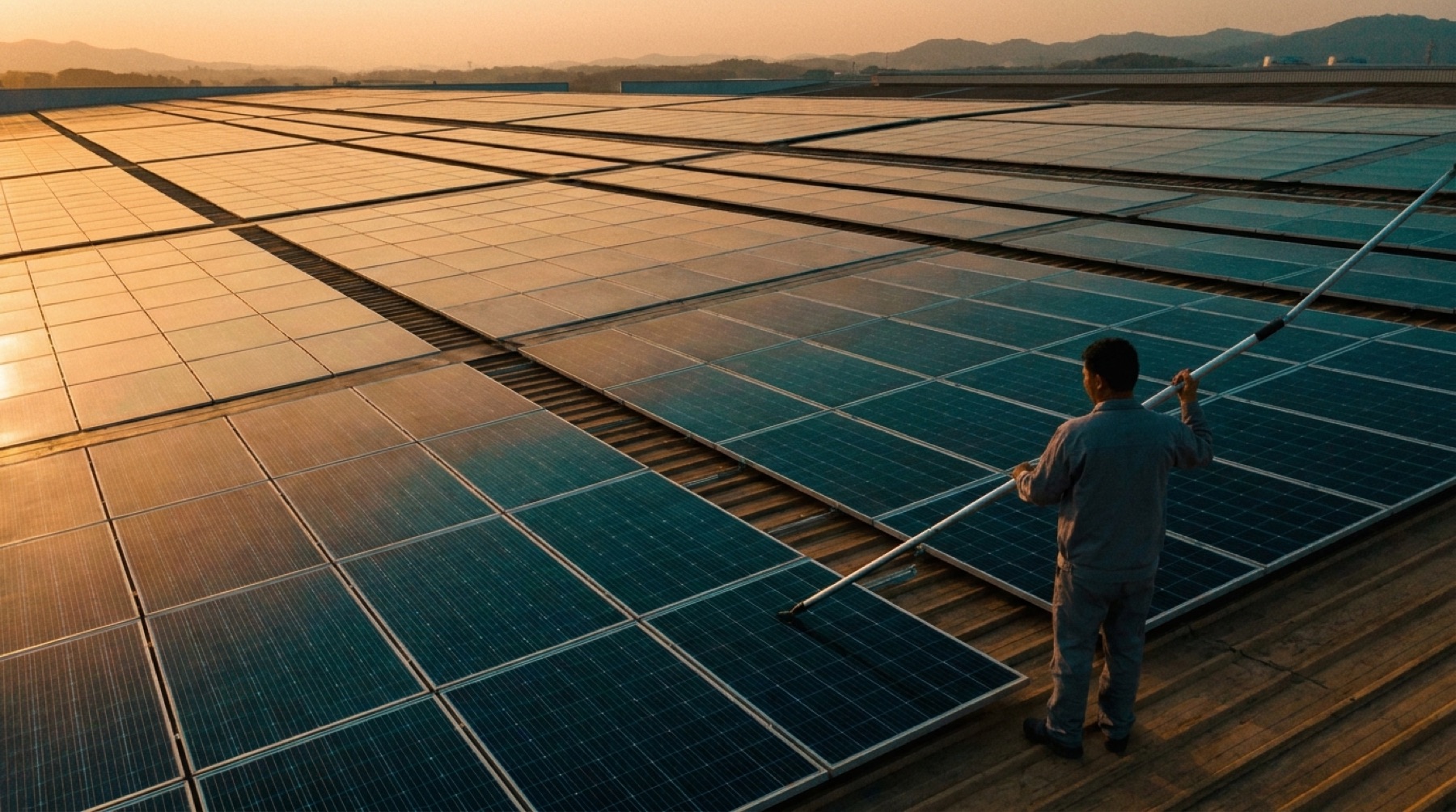
Lavee · waterless cleaning of photovoltaic panels
Your solar plant clean in three steps.
Without a drop of water.
Dirty panels generate less energy every month — and hardly anyone notices. Lavee cleans each module in about 30 seconds, with no hose, no water truck and no wet roof. Biodegradable, non-toxic, free of alcohol, silicone and wax.
The problem nobody sees
Dirt doesn't warn you. It only shows up on the energy bill.
Most plant owners were never told the modules need cleaning. Dust, soot and bird droppings build up slowly, with no visible sign of failure — and generation quietly drops, month after month.
Every layer blocks light
Each layer of dust blocks part of the light that would reach the cells. The drop is gradual and continuous — that is why it goes unnoticed.
Back to design output
After each cleaning, generation returns to the design level. The ideal interval depends on regional dust, tilt and proximity to roads, crops and construction.
Concentrated dirt becomes a hot spot
Bird droppings and mineral residue create localized shading — hot spots that heat the cell and can permanently damage the module.
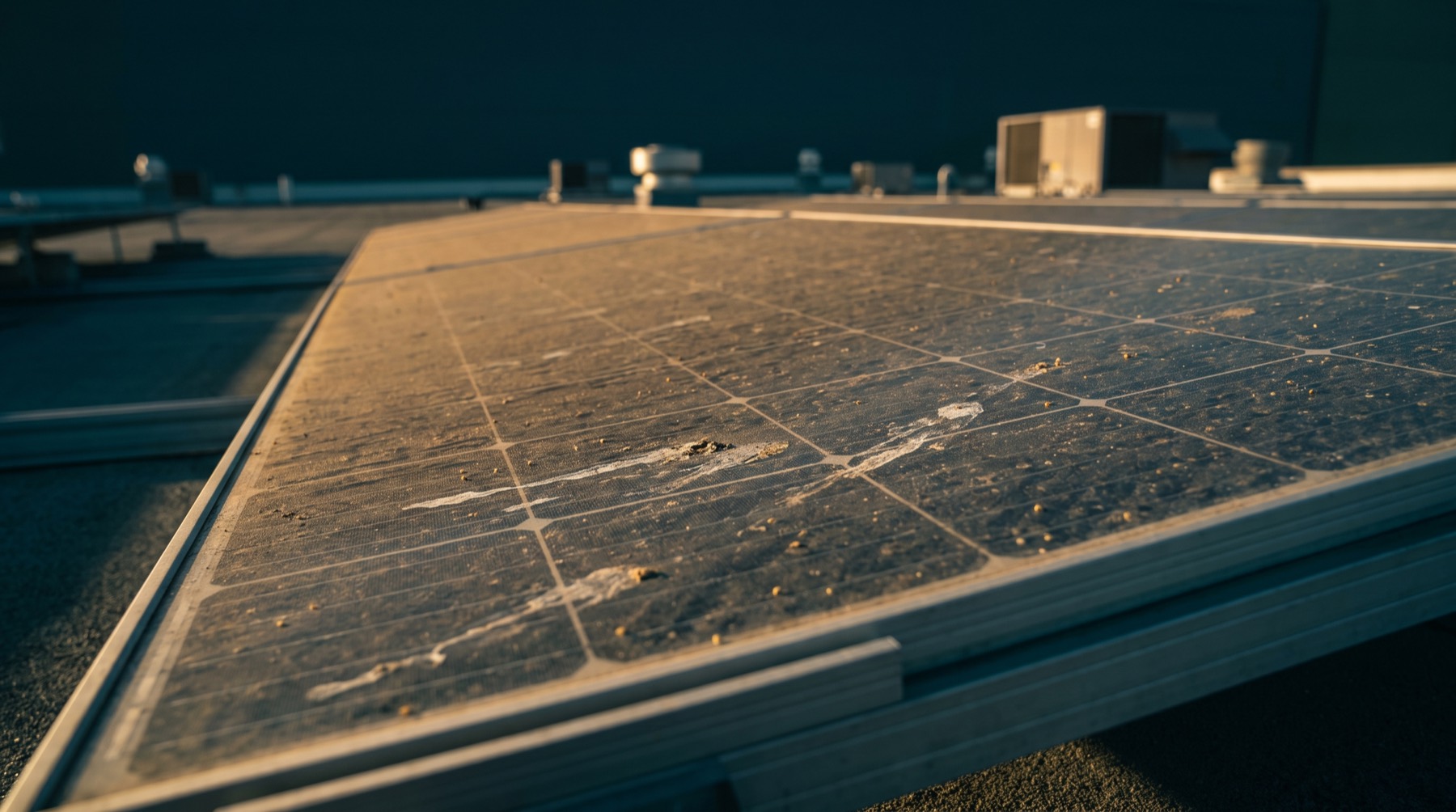
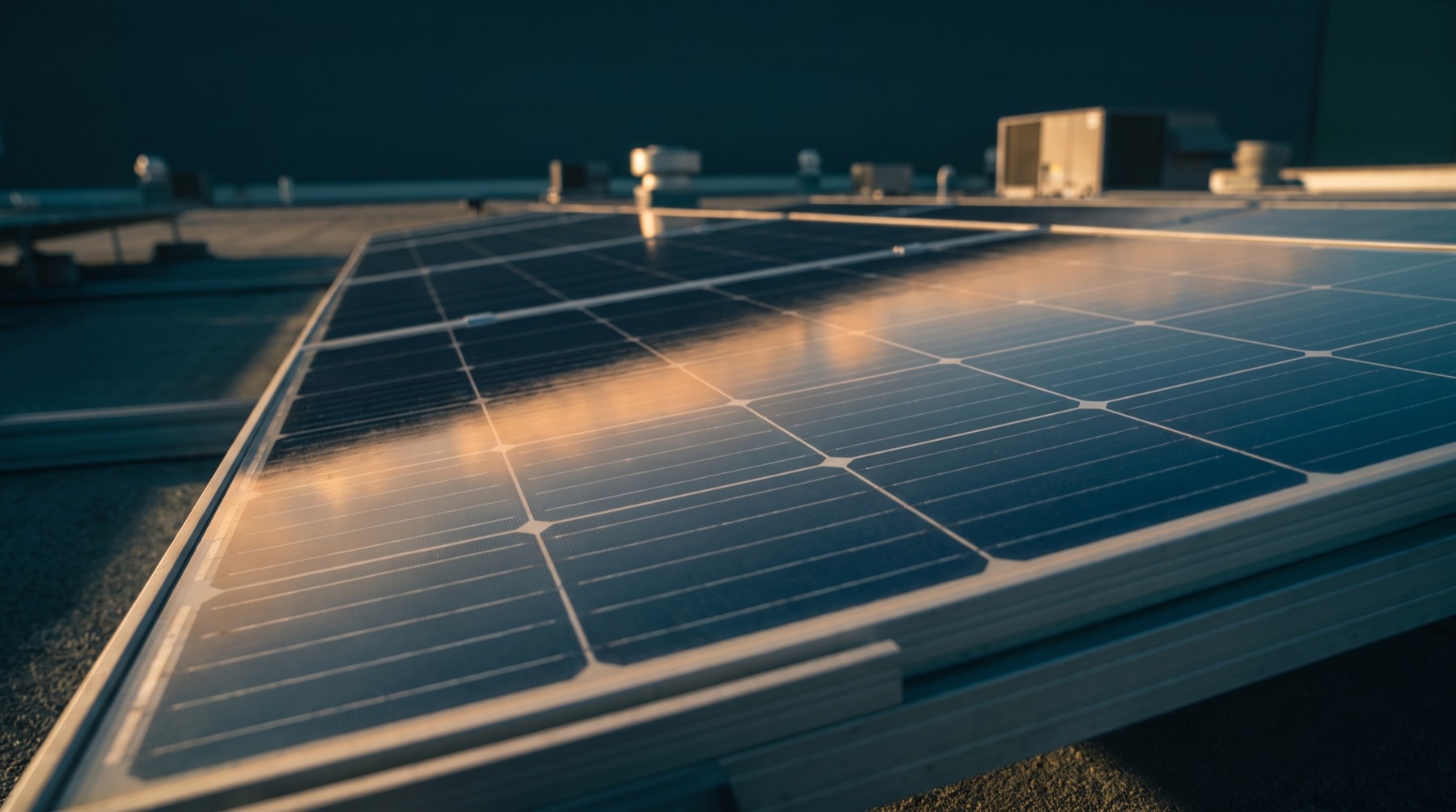 BeforeAfter
Drag and see
Same module. 100 ml later.
Dust, pollen and droppings leave encapsulated on the squeegee. What stays is clean glass and the output the plant was designed for.
The process
Three steps. No diluting, no pre-cleaning, no rinsing.
Apply Lavee straight onto the dirty panel. Keep a steady pace: panel heat evaporates the product, and that is what causes streaks. Prefer times of low sunlight.
Spray Lavee
50 to 100 ml over the dirty panel, covering the whole surface. No preparation and no diluting — the product comes ready to use.
Spread with the white pad
With the pole and the soft white pad, spread the product across the whole module. The pad's job is to even out, not to scrub.
Finish with the squeegee
With the aluminum glass squeegee, remove all residue. Start at the top of the panel and pull down to the base.
What if streaks appear?
A few streaks are normal and acceptable — they vanish with the first dew and do not affect generation at all. Many streaks mean too little product: Lavee is water-based and evaporated too soon, usually because the panel was hot. Just repeat the process with more product.
Why waterless
Ordinary water is not neutral for your module.
Hose cleaning uses on average 5 liters per module. In a 2,000-panel plant that is 10,000 liters someone has to bring, apply on the roof and dispose of. And it is not only resource cost: it is risk for the asset and for whoever is up there.
Chlorine attacks the seal
Chlorine compromises the module's silicone seal, opening the way to leaks and shorter service life.
Minerals scratch the glass
Minerals abrade the glass and leave residue, creating hot spots that hurt generation.
No leaks, fewer falls
With no water on the roof there is no leak risk, and the risk of slipping and falling drops sharply.
Clean for longer
The formula generates no static in the cleaning motion — dust doesn't cling back to the panel as fast.
5 liters per panel become zero
No tank, pump, hose or water transport to the plant. The 5 liters a hose spends on one module become, in a Lavee sprayer, product for fifty.
No effluent
With no water in the process there is no contaminated water leaving it. Nothing to contain, drain or treat afterwards.
Who it's for
Everyone gains something different with Lavee.
Dry cleaning solves different problems depending on where you are in the solar chain. Pick the scenario closest to yours.
EPCs and installers
You build the plant, and you are the one the customer calls when generation drops.
- Deliver the after-sales nobody delivers
- Recurring revenue on the installed base
- No wetting a roof you installed yourself
- Team training included
O&M and cleaning companies
You provide the service and your cost is labor, travel and water logistics.
- No water truck, no tank
- ~30 s per module: more panels per day
- Works where there is no water supply
- Cost simulator with optimal crew and day plan
Plant owners
You invested in generation and want the return you counted on when you bought.
- Protects the asset: no chlorine on the seal, no hot-spot risk
- No wet work on your roof
- Can be done by your own team
- Full technical documentation and SDS
Equipment
Simple, affordable — and decisive for the result
Four items, all easy to find in pool or hardware stores. Using the right equipment is what separates a good result from a frustrating one — most streak complaints come from a weak sprayer.
Aluminum pole
Extends to 4.5 m — reaches the module without stepping on it. A 6 m carbon version is also available.
White glass pad
Flat, firm and soft — never a brush or a fluffy mop. Use both sides: each cleans about 15 panels, and it is washable.
55 cm aluminum squeegee
Silicone blade, cleans the panel in two passes. Single top-to-bottom strokes, no stopping halfway.
Pressure sprayer
With spray adjustment and pressure valve — it must cover the whole panel. An ordinary trigger sprayer won't do.
The result
Clean glass, generation back to design level.
Without a drop of water, without effluent and without anyone stepping on the modules. That is the state your plant should be in all year round.
Get a quote
Tell us about your plant.
How many panels, where the plant is and how often you plan to clean. We reply with the product volume, the equipment kit, export documentation and training for your team.
- Consumption estimate: 50–100 ml per panel
- Technical data sheet, SDS and user manual in English
- Team training included
- Export quotes — pack sizes from 5 to 1,000 liters
How much energy does a dirty solar panel lose?
It depends on dust, tilt and the environment, and the loss builds up quietly. In our operating history, panels cleaned with Lavee reach 7% more generation than when washed with water.
Is it better to clean solar panels with or without water?
Dry. Water carries chlorine and minerals onto the glass and seal, wets the roof and uses about 5 liters per panel. Lavee cleans in about 30 seconds per module without a drop.
How often should solar panels be cleaned?
It depends on the dust in the region, tilt and proximity to roads, crops and construction. Most plants benefit from a periodic schedule; we help you set the interval from your generation data.
Is Lavee safe for the module and the warranty?
Lavee is approved by 13 module manufacturers and has been tested by Unicamp, TÜV SÜD, TÜV Nord and Ecolyzer. It is water-based, non-toxic and free of alcohol, silicone and wax.
Do you ship outside Brazil?
Yes. We quote with export documentation, data sheets and SDS in English, in pack sizes from 5 to 1,000 liters.